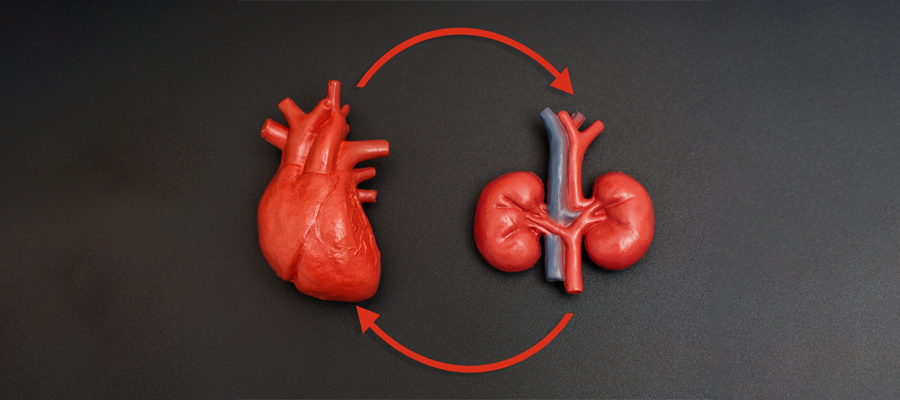
Routine screening for silent kidney disease in cardiac patients, aggressive blood pressure targets, and standardizing multidrug protective regimens are among key recommendations in the first-ever cardiorenal guidelines from the European Society of Cardiology (ESC).
The recommendations, developed with the European Renal Association (ERA), signal a continuing global shift toward integrated cardiorenal management.
“This is so important because cardiovascular and kidney disease are deeply interconnected, yet we have often approached them as separate conditions,” said Nisha Bansal, MD, MAS, a professor of nephrology at the University of Washington in Seattle. “The ESC, in bringing these two areas together, emphasizes earlier detection of kidney disease and treatment strategies that can protect both the heart and the kidneys.”
In this sense, the guidelines closely follow the 2026 joint US guidelines for cardiovascular-kidney-metabolic (CKM) syndrome published by the American Heart Association (AHA), American College of Cardiology (ACC), American Diabetes Association, and American Society of Nephrology.
Article Key Points
Screen all CVD patients for CKD using eGFR + urine albumin/creatinine ratio.
STAMP framework: screen, triage, address CKD factors, modify CVD care, plan multidisciplinary follow-up.
Foundational therapy: RAS inhibitor + SGLT2 inhibitor + statin to slow CKD and ↓ CV events.
Add finerenone or GLP-1 RA in T2D/HF for further cardiorenal risk reduction.
Target SBP 120-129 mm Hg if tolerated; DOACs preferred in AF + CKD.
How do STAMP outcomes compare with CKM staging?
What predicts transient eGFR decline after RAS inhibition?
Which CKD patients benefit most from finerenone add-on therapy?
Speaking at the European Society of Cardiology (ESC) Congress 2026, task force co-chair Kevin Damman, MD, PhD, who is a clinical cardiologist at the University Medical Center Groningen in Groningen, Netherlands, emphasized the importance of early intervention and urged clinicians not to panic over initial, transient drops in renal function when initiating therapy.
“What we propose in these guidelines is to use many classes of drugs that are already often used in chronic kidney disease [CKD] but also in cardiovascular disease [CVD]: RAS [renin-angiotensin system] inhibitors, SGLT2 inhibitors, GLP-1 receptor agonists, and nonsteroidal MRAs [mineralocorticoid receptor antagonists],” Damman said. “They’re easy to use, they’re cheap, they’re effective, and safe.”
Damman urged cardiologists to maintain these protective therapies even if a hemodynamic drop in the eGFR occurs upon initiation, noting that mild early declines are expected and ultimately outweighed by long-term cardiorenal benefits.
Janani Rangaswami, MD, a professor of medicine at George Washington University in Washington, DC, and member of the AHA/ACC CKM syndrome guideline writing group, also encouraged cardiologists to overcome fear of acute kidney metrics in order to deliver necessary care.
For example, she noted, clinicians frequently withhold lifesaving angiograms or stent procedures in patients with heart attacks out of fear that the contrast dye will damage the kidneys.
“The ESC guideline extends its scope to decompensated HF [heart failure], provides guidance on in-hospital decongestion strategies, and highlights the importance of not delaying evidence-based care in individuals with CKD and coronary angiography/contrast exposure in STEMI [ST-elevation myocardial infarction] and high-risk NSTEMI [non-STEMI] because of CKD, regardless of severity,” she said.
5 Key Takeaways for Practice
The new ESC/ERA document outlines five core priorities for clinicians managing patients across the cardiorenal spectrum:
Mandatory dual-parameter CKD screening: All patients with established CVD should be screened at diagnosis using both eGFR and urine albumin to creatinine ratio to detect subclinical kidney injury.
The “STAMP” clinical framework: Practice should follow a structured five-step approach, namely, screen for disease, triage risk, address CKD progression factors, modify CVD interventions, and plan multidisciplinary care.
Foundational combination therapy: Standard care to slow renal decline and prevent major adverse CV event centers on combining a RAS inhibitor (angiotensin-converting enzyme inhibitor or angiotensin II receptor blocker), an SGLT2 inhibitor, and statin-based lipid therapy.
Targeted add-on pharmacotherapy: For patients with comorbid type 2 diabetes or heart failure, clinicians should incorporate nonsteroidal MRAs (eg, finerenone) and GLP-1 receptor agonists to further attenuate cardiorenal risk.
Intensive blood pressure and anticoagulation targets: Guidelines recommend targeting a systolic blood pressure of 120-129 mm Hg for a patient with an eGFR 30 mL/min/1.73 m2 when tolerated. For patients with atrial fibrillation and CKD and an eGFR 30 mL/min/1.73 m2, direct oral anticoagulants are class I recommended. For patients with an eGFR of 15-29 mL/min/1.73 m2, oral factor Xa inhibitors are class IIa recommended over vitamin K antagonists.
Transatlantic Differences: CKM Syndrome Staging vs the Action Checklist
While both guidelines unite cardiology and nephrology, their overarching clinical models diverge in notable ways:
Disease framework: The US guideline broadens the umbrella into CKM syndrome, integrating metabolic risk factors such as obesity, prediabetes, and liver disease. In contrast, the ESC guideline maintains a tight, dual-organ focus specifically on the interplay between CVD and CKD.
Classification systems: The US model establishes a formal CKM syndrome staging system (stages 0-4), tracking disease progression long before laboratory markers register organ damage. The ESC model foregoes numeric staging in favor of the pragmatic STAMP action checklist.
Risk stratification tools: US guidance adopts the PREVENT equations to project 10- and 30-year risk for heart failure and atherosclerotic CVD. The ESC document relies on European-validated risk scoring tools (including SCORE2 with CKD add-on and the Kidney Failure Risk Equation).
Social determinants of health: The US document explicitly mandates routine screening for social determinants of health, such as food insecurity, housing instability, and financial strain, to inform clinical decision-making. The ESC framework focuses primarily on clinical biomarkers and health-system delivery paradigms.
“Whereas [the US guidelines] are focusing on the start of obesity and then progressing to chronic kidney disease, we tackle the entire cardiovascular continuum,” Damman said.
Commonly Asked by HCPs
Q: What multidrug therapy best slows CKD progression and reduces cardiovascular risk?
A: Foundational cardiorenal therapy usually centers on combining renin-angiotensin system blockade, SGLT2 inhibition, and statin-based lipid management, with additional agents layered according to diabetes, heart failure, albuminuria, and residual risk. Physicians often research how to sequence these therapies, monitor renal function, and manage expected early hemodynamic changes.
Q: How should atrial fibrillation anticoagulation be managed in patients with advanced CKD?
A: Anticoagulation in atrial fibrillation with CKD depends on kidney function, bleeding risk, and the specific oral agent’s renal clearance. Contemporary guidance generally favors direct oral anticoagulants over vitamin K antagonists in many patients with moderate CKD, while more advanced CKD requires closer attention to agent selection, dosing limits, and evidence gaps.
Q: When should blood pressure targets be intensified in patients with CKD and heart disease?
A: In CKD with cardiovascular disease, more intensive systolic blood pressure control is often pursued when tolerated, because lower pressure can reduce both renal and cardiovascular events. Clinicians typically balance target selection against frailty, orthostasis, proteinuria, and the risk of acute eGFR decline after therapy intensification.
Q: How should clinicians screen for chronic kidney disease in patients with cardiovascular disease?
A: Routine CKD screening in cardiovascular disease generally includes both eGFR and urine albumin-to-creatinine ratio, because albuminuria can identify kidney damage even when creatinine-based estimates appear preserved. Ongoing research typically focuses on how early detection changes risk stratification, referral timing, and initiation of kidney- and heart-protective therapy.
Q: What heart failure therapies are preferred when CKD and volume overload coexist?
A: Heart failure with CKD is usually managed with careful decongestion plus disease-modifying therapy that preserves cardiorenal outcomes. Research commonly addresses loop diuretic strategy, inpatient volume assessment, and the safety of continuing guideline-directed therapies despite modest early renal function changes during treatment initiation.