

Chen
Liang
PhD
FAMIA
Contact
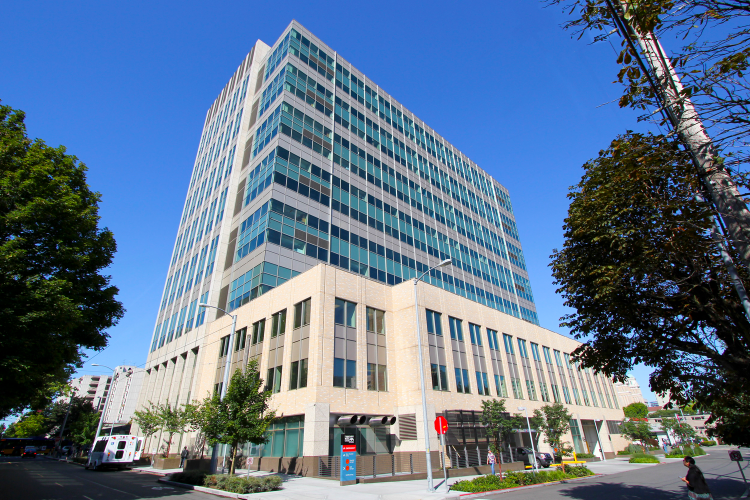
University of Washington
Department of Biomedical Informatics and Medical Education (BIME)
Box 358047
Seattle, WA 98195
Biography
Interests
Electronic Health Records (EHR), multi-modal health data integration, common data models, biomedical ontology, EHR-based deep phenotyping and data mining, machine-learning-based clinical predictive models to be used for augmenting Clinical Decision Support Systems, diagnostics, screening, comorbidity reasoning, prognosis prediction, and evidence-based intervention.
Background
Dr. Liang was intrigued by artificial intelligence and computers since he was majoring in Electrical and Information Engineering at Soochow University. Later he was awarded a scholarship from the University of Texas McWilliams School of Biomedical Informatics and received his PhD in Biomedical Informatics there. Since then, he has been committed to developing artificial intelligence for augmenting clinical care and translational medicine. Dr. Liang is a Fellow of the American Medical Informatics Association. Nationally, he was recognized as the Data and Technology Advancement (DATA) Scholar serving at NIH/NIDDK. Emerging as a prominent junior researcher, he was the Principal Investigator to lead two NIH/NIAID funded R21 grants and Co-Investigator on numerous extramural grants.
Research
Dr. Liang’s research has centered on multi-modal health data integration, common data models, biomedical ontology, EHR-based deep phenotyping and data mining, and machine-learning-based clinical predictive models to be used for augmenting Clinical Decision Support Systems, diagnostics, screening, comorbidity reasoning, prognosis prediction, and evidence-based intervention. He has applied these informatics methods in infectious and immune-mediated diseases (e.g., COVID-19, HIV/AIDS), obstetrics and gynecology, precision medicine in nephrology, cardio-cerebrovascular diseases, oral dental and craniofacial medicine, and substance use disorders.
Current projects
- AI application to aid patient-centered comprehension of CKD.
- Deep EHR phenotyping algorithms and multi-modal data modeling.
Publications
Education and Training
2012-2017
Ph.D. in Biomedical Informatics
McWilliams School of Biomedical Informatics, University of Texas Health
Science Center, Houston, Texas
2009-2012
M.S. in Psychology
Soochow University, Suzhou, China
2004-2008
B.E. in Electrical and Information Engineering (with honors)
Soochow University, Suzhou, China
Links
Department of Biomedical Informatics and Medical Education (BIME)
Fellow of the American Medical Informatics Association